
VIP member
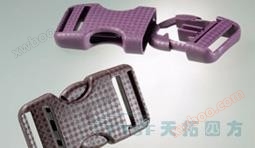
Mastering precise information flow, designing and creating globally brilliant works
The long-standing and prosperous foundation of professional softlines accessories in the Asian ready to wear industry has prompted manufacturers and s
Product details
Professional Softlines Accessories
The long-standing and prosperous foundation of the Asian ready to wear industry has led to the gathering of manufacturers and sellers of related accessories, who have mastered the design and production capabilities of fashion trends and successfully absorbed considerable global orders. Button International, headquartered in Taiwan, is the top contender in this fiercely contested area.
Beiteng International started with ready to wear accessories, hence the company name "button". In 1994, it was founded by four senior colleagues and is currently one of the largest ready to wear accessory suppliers in Asia.
Over the past 15 years, we have continuously expanded from design and development to mold production, operating independently and consistently. Beiteng has a strong team of designers, equipment and mold engineers, who widely use plastic, metal and environmentally friendly raw materials to develop stylish fastener products, and have successfully obtained dozens of domestic and foreign patents.
Ready to wear accessories refer to the accessories and fasteners of general clothing products (ready to wear, backpacks) that are not made of fabric. Due to the fact that international brand merchants often only place orders with 2-3 accessory suppliers, the competition in the industry is very fierce. When a mistake fails to keep up with the trend requirements, the loss of orders can be extremely serious.
Winning with innovative design, competing fiercely in the market
In addition to undertaking the production of fasteners and accessories designed by clothing brands themselves, accessory manufacturers also launch updated and creative products at international clothing exhibitions such as Salt Lake City and Munich every year for clothing manufacturers to choose from or refer to. The final design draft is determined by the brand designer in conjunction with the company's annual design theme, and then commissioned to the accessory industry for mold making and production manufacturing.
In other words, the profit focus of accessory manufacturers lies in "promoting innovation", while operational performance depends on customization capabilities and control of production costs. Due to the compact nature of every stage from demand to mass production, it is often necessary to achieve the task of market supply in a short period of time. Therefore, any slight error in the transmission of design information often results in financial losses.
Beiteng International recognizes that "smooth and accurate information flow" will be the key to enhancing the operational competitiveness of enterprises. So in 2008, Engineering Process Management was introduced under Siemens PLM Software's Teamcenter product lifecycle management solution, aiming to improve the efficiency and overall design quality of the "from demand to production" process.
Teamcenter also transforms data retrieval issues into efficient knowledge sharing. For example, many times, brand owners choose design samples, which may include not only newly developed works but also samples from previous years. Chen Zonglong continued, "When we receive such requests from business personnel, we must search through existing drawings and make the modifications that customers want. Before using Teamcenter, we were not sure if the designs on the catalog were truly consistent with the design files in the information system. But with Teamcenter, we can now put aside our doubts about data accuracy and focus on handling equipment ”
Considering the huge cost of migrating old data and to ensure 100% accuracy of data within the Teamcenter system, Beiteng has adopted a "segmentation strategy" to incorporate newly created design color image data into the new product lifecycle management system for management, while historical data before the new system is implemented is still archived in the original system.
Accurate data, design process time to achieve the Great Leap Forward
Enabling the Teamcenter solution not only digitized Beiteng's data, but also rebuilt the company's business processes. For example, in the past, when business personnel received orders and conveyed customer design requirements, email was the main communication tool. But email is not a secure medium of information, especially when there are modifications to the design draft. Once the information is not truly transmitted to the design department, it may lead to errors in the next process - for example, if a mold is made based on a non final design draft, it may produce a product that is not 100% confirmed by the customer.
But now, these painful mistakes will not be repeated. Because all design data is stored in the Teamcenter system, who inputs specification data, who proposes and executes modifications during the project process, who approves and signs design drafts, all information is transparently recorded, and responsibility is clearly assigned.
But now, these painful mistakes will not be repeated. Because all design data is stored in the Teamcenter system, who inputs specification data, who proposes and executes modifications during the project process, who approves and signs design drafts, all information is transparently recorded, and responsibility is clearly assigned.
On the other hand, Beiteng has also made significant progress in improving project management progress. Chen Zonglong affirmed that such achievements are comprehensive: "In fact, because the design and development process is smoother, and the timeliness and accuracy of data output are better, the average process time for each design project has been greatly reduced from 2-3 days to 2 hours
Fast tracking, energy-saving and environmentally friendly
EAMCenter's web-based interface also allows project personnel to log in, view, update project data, and track progress at any time. Chen Zonglong said, "After centralized data management, users can easily track product progress, and any changes during the process can also be set up to proactively notify relevant personnel, allowing managers to have real-time access to the overview of product projects
On the other hand, a high proportion of electronic data also significantly reduces paper output, making it environmentally friendly and energy-efficient.
Online inquiry
-
Contacts
-
Company
-
Telephone
-
Email
-
WeChat
-
Verification Code
-
Message Content
-